What is a rotator cuff injury?
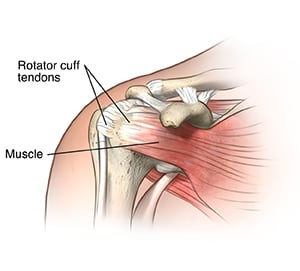
Your rotator cuff consists of four muscles and tendons that connect your upper arm bone to your shoulder blade.
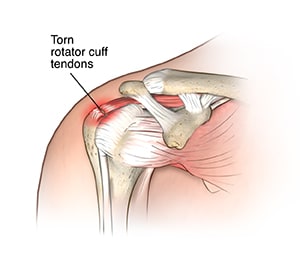
Your rotator cuff allows you to lift and rotate your arm. A rotator cuff injury is irritation or a tear of one or more of the rotator cuff tendons. A rotator cuff injury is a common cause of pain and disability among adults.
What causes a rotator cuff injury?
An injury to the rotator cuff may happen suddenly when falling on an outstretched hand. It may also develop over time due to repetitive activities. Rotator cuff tears can also happen due to the breakdown (degeneration) of the tissues, which may happen as part of the aging process.
What are the symptoms of a rotator cuff injury?
Symptoms may be a bit different for each person. Symptoms may include:
- Pain that keeps coming back, especially when doing certain things, such as lifting over your head.
- Pain that prevents you from sleeping on your injured side.
- Grating or cracking sounds when moving your arm.
- Limited ability to move your arm.
- Muscle weakness.
The symptoms of a rotator cuff injury may be caused by other conditions or health problems. Always talk with your doctor for a diagnosis.
How is a rotator cuff injury diagnosed?
Your doctor will take a complete health history and do a physical exam. You may also have diagnostic tests, such as:
- X-ray. This test uses invisible electromagnetic energy beams to make images of internal tissues, bones, and organs on film.
- MRI. This test uses a combination of large magnets, radiofrequencies, and a computer to make detailed images of organs and structures within the body.
A rotator cuff may tear partly or fully.
How is a rotator cuff injury treated?
Treatment will depend on your symptoms, age, and general health. It'll also depend on how bad the condition is.
Treatment may include:
- Rest.
- Nonsteroidal anti-inflammatory drugs (NSAIDS).
- Strengthening and stretching exercises.
- Corticosteroid shot (injection).
- Surgery for severe tears.
When should you contact your doctor?
Contact your doctor if:
- Your pain gets worse or starts to interfere with your normal activities or ability to sleep well.
- You can't use your shoulder like you used to.
Key points about rotator cuff injuries
- Your rotator cuff allows you to lift and rotate your arm.
- Sudden tears and breakdown (degeneration) are the two main causes of rotator cuff injuries.
- Symptoms may include pain that keeps coming back, muscle weakness, limited ability to move your arm, and grating or cracking sounds when moving your arm.
- Treatment may include rest, medicine, strengthening and stretching exercises, and surgery.
- Contact your doctor if pain gets worse or you can't use your arm like you used to.
Next steps
Here are some tips to help you get the most from a visit to your doctor:
- Know the reason for your visit and what you want to happen.
- Before your visit, write down questions you want answered.
- Bring someone with you to help you ask questions and remember what your doctor tells you.
- At the visit, write down the name of a new diagnosis and any new medicines, treatments, or tests. Also write down any new instructions your doctor gives you.
- Know why a new medicine or treatment is prescribed and how it will help you. Also know what the side effects are and when they should be reported.
- Ask if your condition can be treated in other ways.
- Know why a test or procedure is recommended and what the results could mean.
- Know what to expect if you don't take the medicine or have the test or procedure.
- If you have a follow-up appointment, write down the date, time, and purpose for that visit.
- Know how you can contact your doctor if you have questions, especially after office hours or on weekends and holidays.
Online Medical Reviewer: Raymond Turley Jr PA-C
Online Medical Reviewer: Rita Sather RN
Online Medical Reviewer: Thomas N Joseph MD
Date Last Reviewed: 09/01/2023
© 2000-2026 The StayWell Company, LLC. All rights reserved. This information is not intended as a substitute for professional medical care. Always follow your healthcare professional's instructions.