What is genital herpes?
Genital herpes is a sexually transmitted infection (STI). It is caused by the herpes simplex virus (HSV). Herpes infections can cause blisters and ulcers on the mouth or face (oral herpes). They can also cause sores in the genital area (genital herpes). HSV is a lifelong infection.
What are the symptoms of genital herpes?
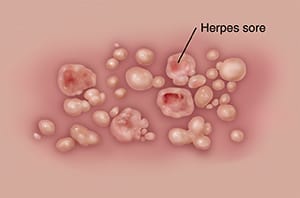
Symptoms may include painful blisters or open sores in the genital area. They may tingle or itch. Before these symptoms appear, you may feel a tingling or burning feeling in your legs, buttocks, or genital area. The herpes sores often go away within a few weeks. But the virus stays in the body. The sores may come back from time to time.
How does genital HSV affect pregnancy?
It's important not to get herpes during pregnancy. A first infection during pregnancy raises the risk of spreading it to your newborn. HSV can cause a possibly life threatening infection in your baby if you have active genital herpes (shedding the virus) at the time of birth. Cesarean section is often recommended for active genital herpes at the time of delivery. Fortunately, infection of a baby is rare among people with genital herpes.
How is genital herpes treated during pregnancy?
You may be treated with an antiviral medicine such as acyclovir during outbreaks. Your doctor may recommend taking daily antiviral medicines for the last 4 to 6 weeks of the pregnancy. This is to prevent outbreaks at the time of delivery.
How can you prevent transmission of herpes?
It's important not to have sex when you have symptoms of active herpes. Also use latex condoms between outbreaks.
Date Last Reviewed: 09/01/2025
© 2000-2026 The StayWell Company, LLC. All rights reserved. This information is not intended as a substitute for professional medical care. Always follow your healthcare professional's instructions.