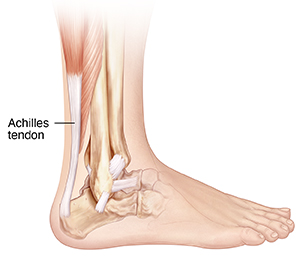
Achilles tendonitis is an overuse injury. It causes inflammation of the Achilles tendon. This tendon is found on the back of the ankle. It links the calf muscle to the heel bone. It helps you do pushing-off movements like running or standing on your toes.
How to say it
uh-KILL-eez ten-dun-I-tis
What causes Achilles tendonitis?
Achilles tendonitis can happen if you do an activity like running, walking, or jumping too much. This overuse can strain, or pull, the tendon. It may lead to minor tearing of the tendon. An injury to the lower leg or foot can also cause it.
A tight calf can cause it so if you don’t warm up before taking part in sports, such as basketball. Then you are more likely to suffer from this condition. You are also more prone to it if you do too much of such an activity too quickly. Correct training and rest can help prevent it.
Symptoms of Achilles tendonitis
The main symptom of Achilles tendonitis is pain. This pain mostly happens when you move the ankle. The tendon may also feel stiff after a period of no activity, such as sleeping. It may also become swollen. You may hear a crackling sound when you move your ankle. The tendon can become thick. And a bone spur may occur.
Treatment for Achilles tendonitis
Symptoms often get better after starting treatment. A full recovery may take several months. Treatments include:
-
Rest. Stop or change the activity that caused the injury. The tendon will then have time to heal.
-
Cold packs. This helps reduce pain and swelling.
-
Prescription or over-the-counter medicines. These help reduce pain and swelling.
-
Shoe inserts. These devices can reduce strain on the Achilles tendon when you move. You may then feel less pain.
-
Stretching and strengthening exercises. Certain exercises can help you regain flexibility and strength in your Achilles tendon.
-
Surgery. This choice can fix the injured tendon. But you won’t need to consider it unless other treatments don’t work.
When to contact your doctor
Contact your doctor right away if any of the following occur:
-
Fever of 100.4°F (38°C) or higher, or as directed by your doctor
-
Chills
-
Pain that gets worse
-
Symptoms that don’t get better, or that get worse
-
New symptoms
Author: Semko, Laura
Online Medical Reviewer: Rahul Banerjee MD
Online Medical Reviewer: Stacey Wojcik MBA BSN RN
Date Last Reviewed: 05/01/2025
© 2000-2026 The StayWell Company, LLC. All rights reserved. This information is not intended as a substitute for professional medical care. Always follow your healthcare professional's instructions.