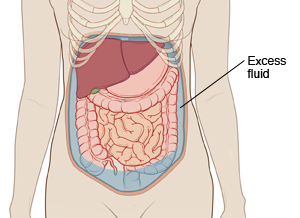
Paracentesis is a procedure to remove extra fluid from your belly (abdomen). This fluid buildup in the abdomen is called ascites. The procedure may have been done to take a sample of the fluid for diagnosis. Or it may have been done to drain the extra fluid from your abdomen and help make you more comfortable.
Home care
-
If you have pain after the procedure, your health care provider can prescribe or recommend pain medicines. Take these exactly as directed. If you stopped taking other medicines before the procedure, ask your provider when you can start them again.
-
Take it easy for
24 hours after the procedure. Don't do any physical activity until your provider says it’s OK. -
You will have a small bandage over the puncture site. Stitches, surgical staples, adhesive tapes, adhesive strips, or surgical glue may be used to close the cut (incision). They also help stop bleeding and speed healing. You may take the bandage off in
24 hours. -
Check the puncture site for the signs of infection listed below.
Follow-up care
Make a follow-up appointment with your provider as directed. During your follow-up visit, your provider will check your healing. Let your provider know how you are feeling. You can also discuss the cause of your ascites and if you need any further treatment. If your fluid is infected, you will be given antibiotics. If so, take them as directed. Do not stop taking them just because you feel better. You need to take the full course of antibiotics. In some cases, the paracentesis may need to be repeated if the fluid returns. Your provider may also prescribe medicines that increase urination (diuretics) to decrease the buildup of fluid.
When to contact your doctor
Contact your provider if:
-
You have a fever of
100.4 ° F (38 °C) or higher, or as directed by your provider. -
You have chills.
-
You have trouble breathing.
-
Your pain doesn't go away even after taking pain medicine.
-
You have belly pain not caused by having the skin punctured.
-
You are bleeding from the puncture site.
-
More than a small amount of fluid is leaking from the puncture site.
-
Your belly is swollen.
-
You have signs of infection at the puncture site. These include increased pain, redness, or swelling, warmth, or bad-smelling drainage.
-
There's blood in your urine.
-
You are feeling dizzy or lightheaded, or fainting.
Author: Accountmgr
Author: krubio
Online Medical Reviewer: Jen Lehrer MD
Online Medical Reviewer: L Renee Watson MSN RN
Online Medical Reviewer: Marianne Fraser MSN RN
Date Last Reviewed: 03/30/2014
© 2000-2026 The StayWell Company, LLC. All rights reserved. This information is not intended as a substitute for professional medical care. Always follow your healthcare professional's instructions.