The colon (also called the large intestine) is a muscular tube that forms the last part of the digestive tract. It absorbs water and stores food waste. The colon is about 4 to 6 feet long. The rectum is the last 6 inches of the colon. The colon and rectum have a smooth lining composed of millions of cells. Changes in these cells can lead to growths called polyps in the colon. These can become cancerous and should be removed. Many tests are available to screen for colon cancer. But colonoscopy is the only test that looks directly into the entire large intestine and allows for treatment right away. During colonoscopy, these polyps can be removed. How often you need this test depends on many things. These include your condition, your family history, symptoms, and what the findings were at the previous colonoscopy.
When the colon lining changes
Changes that happen in the cells that line the colon or rectum can lead to growths called polyps. Over a period of years, polyps can turn into cancer. Removing polyps early may prevent cancer from ever forming.
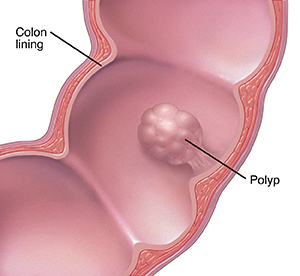
Polyps
Polyps are fleshy clumps of tissue that form on the lining of the colon or rectum. Small polyps are usually not cancer (benign). But over time, cells in a polyp can change and become precancerous. Certain types of polyps known as adenomatous polyps and serrated polyps are precancerous. The risk for cancer also increases with the size of the polyp and certain cell and gene features. This means that they may become cancerous if they're not removed. Hyperplastic polyps are benign. They can grow quite large and not turn cancerous.
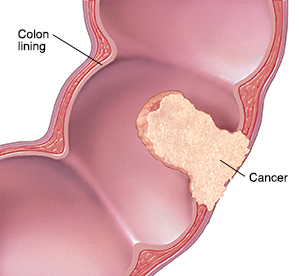
Cancer
Almost all colorectal cancers start when polyp cells start growing abnormally. As a cancerous tumor grows, it may affect more and more of the colon or rectum. In time, cancer can also grow beyond the colon or rectum and spread to nearby organs or to glands called lymph nodes. The cells can also travel to other parts of the body. This is known as metastasis. The earlier a cancerous tumor is removed, the better the chance of preventing its spread.
Featured in
Online Medical Reviewer: Jen Lehrer MD
Online Medical Reviewer: L Renee Watson MSN RN
Online Medical Reviewer: Rita Sather RN
Date Last Reviewed: 04/01/2024
© 2000-2026 The StayWell Company, LLC. All rights reserved. This information is not intended as a substitute for professional medical care. Always follow your healthcare professional's instructions.