You don’t have to accept pain as a normal part of having cancer or getting cancer treatment. There are many medicines to help control pain. There are also many ways to take pain medicines. For instance, you may use pills, patches, or a special pump. As your pain changes, the medicines you need and the way you take them may change as well. You may find that nonmedicine methods may also help you with your pain. These may involve relaxation, massage, and biofeedback.
Work with your health care provider to figure out the best way to handle your pain. And follow your provider's directions to use pain medicines safely so they work well.
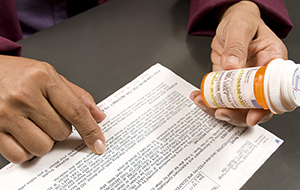
How are pain medicines given?
Pills, tablets, and sprays
Taking pain medicines by mouth is the most common way they are used to treat cancer pain. Some medicines are swallowed as pills or liquids. Others you let melt in your mouth. Some medicines can be taken as a mouth spray or nasal spray.
Patches and suppositories
If you can't take medicines by mouth, a patch may help. It sticks to the skin, giving you medicine over a few days. Some medicines are placed and absorbed in the rectum. These are called suppositories.
I.V.s and PCA pumps
With I.V. (intravenous) delivery, a small tube sends medicines into a vein in your hand or forearm. With a PCA (patient-controlled analgesia) pump, you push a button to get a dose of pain medicine. In some cases, a pump is used to give pain medicine nonstop. This means you don't need to push a button. In either case, the pumps are carefully set. You can only get a certain amount of medicine over a certain amount of time.
Shots
In some cases, shots (injections) are used to treat pain in certain parts of the body. For instance, a steroid shot into a joint can reduce inflammation and joint pain. Or local pain medicine may be injected into nerves. This is called a nerve block.
Spinal and epidural anesthesia
Spinal and epidural anesthesia are sometimes used for very bad pain. These medicines are put near or directly into the fluid that surrounds the spinal cord. These methods block pain in 1 part of the body, often from the waist down.
Will I become addicted?
Addiction is a common concern for people who have to use strong pain medicines (opioids) to treat cancer pain. This fear may keep some people from getting good pain control. Pain medicine can be safely used to treat cancer pain. When taking pain medicines, work closely with your provider. Take medicines only as told.
Over time, some people need higher doses of medicine to get pain relief. This is not addiction. It is tolerance. That means your body has adjusted to the dose you've been taking so it doesn't work as well as it once did. Again, work with your provider to take your pain medicines safely and correctly. Tell your provider if you have a personal or family history of substance use disorder. This helps keep addiction from becoming a problem. It also helps you get the pain control you need.
Always keep your pain medicines in a safe place. Never share them with anyone. Be aware that some people might try to steal your opioid pain medicines and sell them illegally.
Talk with your health care provider
Talk with your provider about your pain and how it affects your life. To make sure of good, safe pain control, be sure to:
-
Know the right doses and how and when to take your pain medicines.
-
Don't crush or break pills unless your provider or pharmacist says it's OK.
-
Ask about the side effects of your pain medicine and what can be done to prevent or control them.
-
Know that you may need to try different medicines, different ways to take them, or different combinations of medicines to get the best results.
-
Make sure that all your providers know about all the medicines you take. But only 1 provider gives you pain medicines.
-
Ask your provider or pharmacist how to get rid of your pain medicines safely when you stop using them.
-
Don't wait to take your medicine until pain gets bad.
-
Don't stop taking all your pain medicines at once. You may need to reduce the dose slowly. Talk with your provider about this.
-
Don't run out of pain medicine. Try to always have a 1-week supply. You may need written prescriptions or extra time to order certain kinds of medicines.
-
Never share your pain medicines with anyone.
-
Store your medicines in a safe place so they can’t be stolen. If you think your medicine has been stolen or lost, tell your provider right away.
When to contact your doctor
Talk with your provider or nurse about side effects or problems you should watch for while taking pain medicines. Also be sure you know when you need to call your provider. You may need to call if:
-
Your pain medicines aren't working.
-
You can't take your pain medicines as prescribed.
-
You have severe side effects. These include breathing problems, trouble waking up, dizziness, confusion, or severe constipation.
Featured in
Online Medical Reviewer: Callie Tayrien RN MSN
Online Medical Reviewer: Jimmy Moe MD
Online Medical Reviewer: Tara Novick BSN MSN
Date Last Reviewed: 03/01/2025
© 2000-2026 The StayWell Company, LLC. All rights reserved. This information is not intended as a substitute for professional medical care. Always follow your healthcare professional's instructions.