Management

Back Safety: Poor Posture Hurts

Choose a preferred language

An unhealthy spine often starts with bad habits. Poor movement patterns and posture problems are common causes of back pain. Disk, bone, nerve, and soft tissue problems can all be affected by poor posture. They can lead to pain, stiffness, and other symptoms.
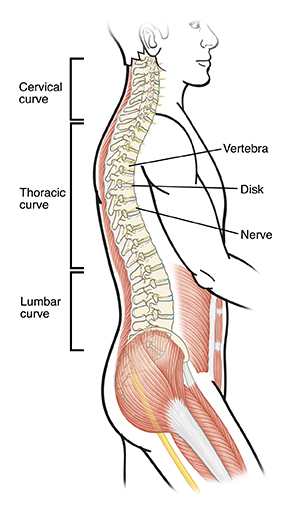
Side view outline of man showing spine, back muscles, and abdominal muscles.


Poor posture backfires

Poor posture can cause pain. Too much slouching puts increased pressure on the disks. An excessive lumbar curve can overload and inflame the vertebrae. As a result, the back muscles may tighten or spasm to “splint” and protect the spine. This adds to the pain you feel.


Correct posture: The key to safe movement

Your spine bears your weight throughout the day. This is true whether you’re sleeping, standing, or bending. Certain positions strain your spine more than others. But by maintaining correct posture in all positions, you can reduce the stress on your spine.
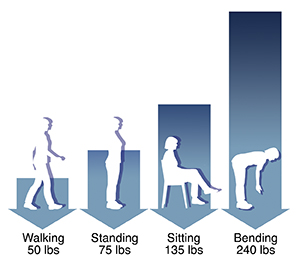
Graph showing pressure on lower back during walking, standing, sitting, and bending.


To improve your standing posture, follow these steps:

  • Breathe deeply.

  • Relax your shoulders, hips, and ankles.

  • Think of the ears, shoulders, hips, and ankles as a series of dots. Now, adjust your body to connect the dots in a straight line.

  • Tuck your buttocks in just a bit if you need to.

Online Medical Reviewer: Louise Cunningham RN BSN

Online Medical Reviewer: Raymond Turley Jr PA-C

Online Medical Reviewer: Thomas N Joseph MD

Date Last Reviewed: 04/01/2024

© 2000-2026 The StayWell Company, LLC. All rights reserved. This information is not intended as a substitute for professional medical care. Always follow your healthcare professional's instructions.



Find a Provider

View Our Directory

Find a Location

View Our Practices
Related Articles
Read article
Orthopedics
Conditioning Before Knee Replacement

Conditioning your body BEFORE knee replacement can help speed your recovery. Daily exercise helps strengthen muscles that support the knee joint.

Read article
Orthopedics
Knee Immobilizer

A knee immobilizer is a type of brace used to provide support and limit movement of the knee. Here's what you need to know as you heal at home.

Read article
Orthopedics
Shoulder Immobilizer

A shoulder immobilizer is designed to hold your arm against your body. It is used for injuries where you need to limit how much you can move your shoulder. These injuries include a shoulder dislocation or shoulder fracture. Moving your shoulder too much could cause harm.

Read article
Orthopedics
Back Safety: Pushing and Pulling

Pushing can be hard on your back, but pulling can be even harder. So, push rather than pull when you can.