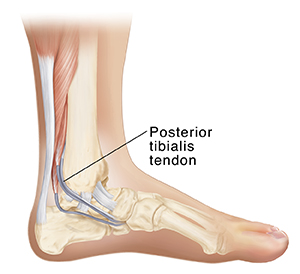
The posterior tibialis tendon runs along the inside of the foot. It connects the calf muscle (posterior tibialis muscle) to bones on the inside of the foot. It helps maintain the arch of the foot. It also gives you stability when you move. Posterior tibialis tenosynovitis is when this tendon becomes inflamed or torn.
How to say it
TIHB-ee-a-lihs ten-oh-sihn-oh-VI-tihs
What causes posterior tibialis tenosynovitis?
This condition is often caused by an injury to the tendon. For instance, a fall can tear the tendon. Overuse can also damage it. People who play sports like basketball or tennis a lot may weaken the tendon over time.
Symptoms of posterior tibialis tenosynovitis
The symptoms of this condition include pain and swelling. The pain is usually felt near the tendon, on the inside of the foot and ankle. It often gets worse over time or with an increase in activity. Your arch may eventually fall, leading to a flat foot. Your foot may also start to turn outward.
Treatment for posterior tibialis tenosynovitis
Treatment for this condition depends on the severity of the tear. Treatment may include:
-
Rest. Don't do any activities that cause pain and swelling. You may also need to limit the amount of weight you put on your injured foot.
-
Cold packs. Putting a cold pack on the tendon may reduce pain and swelling.
-
Medicine. Over-the-counter medicines can reduce pain and swelling. NSAIDs (nonsteroidal anti-inflammatory drugs) are the most common medicines used. Medicines may be prescribed or bought over the counter. They may be given as pills. Or they may be put on the skin as a gel, cream, or patch.
-
Leg cast or walking boot. Severe tears of the posterior tibialis tendon may need to be kept from moving. These devices can help protect the tendon and reduce swelling.
-
Shoe insert or brace. Like a leg cast or walking boot, these devices can help protect the tendon as it heals. They may also ease pain.
-
Strengthening and stretching exercises. Certain exercises can help you regain strength and flexibility in your foot. Your health care provider may refer you to a physical therapist.
-
Surgery. Several surgical choices are available to fix the torn tendon or replace it. But you often don't need surgery unless your symptoms don't get better after trying other treatments for at least 6 months.
When to call your doctor
Call your health care provider right away if you have:
-
A fever of 100.4°F (38°C) or higher, or as advised by your provider.
-
Chills.
-
Pain that gets worse.
-
Symptoms that don’t get better or that get worse.
-
New symptoms.
Author: Semko, Laura
Online Medical Reviewer: Raymond Turley Jr PA-C
Online Medical Reviewer: Stacey Wojcik MBA BSN RN
Online Medical Reviewer: Thomas N Joseph MD
Date Last Reviewed: 03/01/2025
© 2000-2026 The StayWell Company, LLC. All rights reserved. This information is not intended as a substitute for professional medical care. Always follow your healthcare professional's instructions.