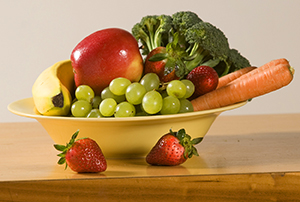
Fresh fruits and vegetables are great quick food choices. They need little or no preparation. And they are loaded with important nutrients.
|
True |
False |
|
|
☐ |
☐ |
1. Eating cabbage can help reduce your risk for some cancers. |
|
☐ |
☐ |
2. Dietary fiber, found in most fresh fruits and vegetables, is also found in animal products. |
|
☐ |
☐ |
3. The deeper the color of a vegetable, the more beta-carotene it has. |
|
☐ |
☐ |
4. A chili pepper has more vitamin C than an orange. |
|
☐ |
☐ |
5. You can enjoy a sweet dessert for under 100 calories. |
|
☐ |
☐ |
6. Fresh fruits and vegetables are made up mostly of water. |
|
☐ |
☐ |
7. Fresh fruits and vegetables have almost no sodium. |
|
☐ |
☐ |
8. Vegetables don't have calcium. |
|
☐ |
☐ |
9. The amount of water used to cook vegetables won’t affect their nutritional content. |
Answers
-
TRUE. Nutrition experts recommend eating cabbage and other cruciferous vegetables such as broccoli, cauliflower, and kale. They can reduce your risk for some types of cancer.
-
FALSE. Dietary fiber is not found in animal products. Whole grains, fruits, and vegetables are all good sources of dietary fiber.
-
TRUE. Foods with more beta-carotene are a deeper shade of yellow, orange, or green. Beta-carotene is an important nutrient for good health.
-
TRUE. One fresh chili pepper has almost 40% more vitamin C than an orange.
-
TRUE. Fresh fruit is a great dessert that is naturally sweet and low in calories. A cup of mixed fresh fruit can have between 65 and 100 calories.
-
TRUE. An average apple is 85% water plus vitamins, minerals, and carbohydrates.
-
TRUE. Almost all fresh fruits and vegetables are low in sodium.
-
FALSE. Good sources of calcium include broccoli, bok choy, and dark leafy greens (kale, mustard, and turnip greens).
-
FALSE. When cooking vegetables, use as little water as possible. This will help you from losing nutrients.
Online Medical Reviewer: Diane Horowitz MD
Online Medical Reviewer: Kenny Turley PA-C
Online Medical Reviewer: Louise Cunningham RN BSN
Date Last Reviewed: 08/01/2022
© 2000-2026 The StayWell Company, LLC. All rights reserved. This information is not intended as a substitute for professional medical care. Always follow your healthcare professional's instructions.