What is it?
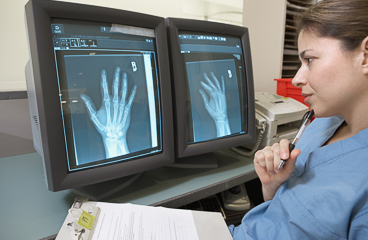
An X-ray is a picture of the inside of your body. Depending on the part of your body to be X-rayed, the X-ray
may show bones, organs, foreign objects, or pockets of air or fluid. Any part of your body can be X-rayed,
including your head, chest, belly, arms, and legs.
Why is this test done?
Doctors use X-rays to help find out what's wrong or whether there is a problem, what is causing pain, or
where a foreign object may be located in your body.
X-rays can also help check the position of a tube or device you've had put in your body. Examples may include
a gastrostomy tube, a port, or a stent.
How do you prepare for the test?
-
In general, there's nothing you have to do before this test, unless your doctor tells you to.
How is the test done?
-
You will need to hold very still while the X-ray is taken. A padded brace, foam pads, a headband, or
sandbags may be used to hold your body in place while the pictures are taken, depending on what part of your
body is being X-rayed. -
More than one X-ray view may be taken.
How long does the test take?
-
The test will take about 5 to 20 minutes, depending on the part of your body being X-rayed. You might be
asked to stay longer if a picture needs to be retaken.
What happens after the test?
-
You will probably be able to go home right away. It depends on the reason for the test.
-
You can go back to your usual activities right away.
Follow-up care is a key part of your treatment and safety. Be sure to make and go to all
appointments, and call your doctor if you are having problems. It's also a good idea to keep a list of the
medicines you take. Ask your doctor when you can expect to have your test results.
Current as of: July 26, 2023
Content Version: 14.0
Care instructions adapted under license by your
healthcare professional. If you have questions about a medical condition or this instruction, always ask
your healthcare professional. Healthwise, Incorporated disclaims any warranty or liability for your use of
this information.